Wicker and rattan forms
FORM
PLATE 05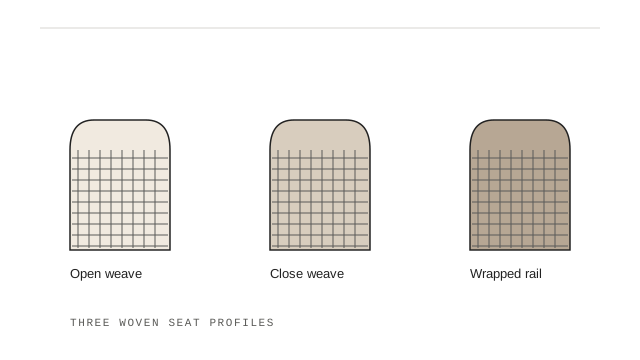
Three weave densities, drawn at the same scale, and what each does to a painted seat.
Woven seating turns up in painted rooms more often than any other non-case form, and the three profiles drawn above cover most of what is found: an open weave, a close weave and a wrapped rail. The differences are structural before they are decorative.
Open weave
An open weave leaves visible gaps between the elements. It is light, it dries quickly, and it takes paint badly: an open weave has an enormous surface area relative to its mass, so a colour coat either goes on thin and patchy or goes on heavy enough to start closing the gaps and stiffening the panel.
Close weave
A close weave presents something much nearer to a continuous surface. It holds a colour coat evenly and reads as a solid block at any distance, which is why close-woven chairs are the ones most often found painted to match a room rather than left natural.
Wrapped rails
Wrapping a frame member in cane or rush changes the way a joint reads: the wrap hides the junction entirely, so the frame appears to be continuous. Under paint the effect is stronger still, and a wrapped rail is one of the few places where a painted film genuinely conceals construction rather than merely covering it.
Paint on woven work
- Expect a woven piece to take considerably more paint by volume than a solid piece of the same apparent size.
- Movement at the weave is normal; a rigid film over a flexible weave will craze along the lines of greatest movement, usually at the seat front.
- Where a weave has already been painted several times, further coats begin to fill the texture that made the piece worth having.