Case-goods proportions
FORM
PLATE 06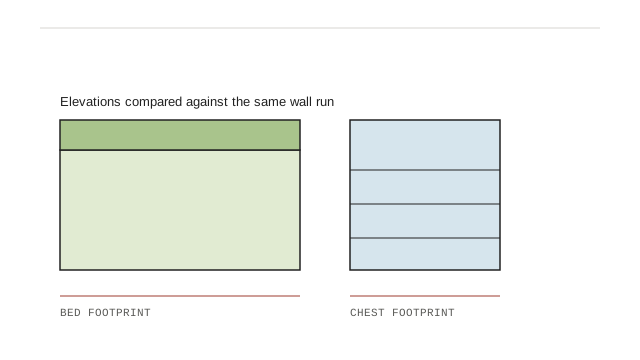
A bed and a chest measured against the same wall run, with the footprint rules drawn under each.
Case goods are the pieces that set the proportions of a room: beds, chests, cupboards, long low storage. The drawing above puts a bed and a chest against the same wall run, with a footprint rule under each, because the useful comparison is almost never height alone.
Wall run before piece
The first measurement worth taking is the length of clear wall, not the width of the piece being considered. A chest that leaves less than a hand's width of wall at either end will read as built-in whether or not it was intended to, and in a small painted room that changes the character of the whole wall.
Height against the window line
Where a piece sits under a window, its top surface either stops well below the sill or sits at the sill. The half-measure between the two, where the case top crosses the lower part of the window opening, is the one arrangement that always looks accidental.
Beds
A painted bed is mostly its end panels, since the sides are covered. That makes the head end the piece's real elevation, and it is worth choosing colour by looking at that panel alone. Low ends keep a small room open; high ends divide it, which is occasionally useful in a long room that needs to read as two.
Depth and circulation
Depth costs more than length in a small room. A chest that is a little longer than ideal is usually forgivable; one that is a little deeper narrows the circulation route past it and will be knocked, which shows immediately on painted edges.
Sets and near-sets
Two pieces of the same height in the same colour on the same wall will read as a set even if they share nothing else. That can be used deliberately, but it is worth knowing that it happens by accident: matching two heights is enough to make two unrelated painted pieces look like a pair.