Textiles and slipcovers
TEXTILES
PLATE 04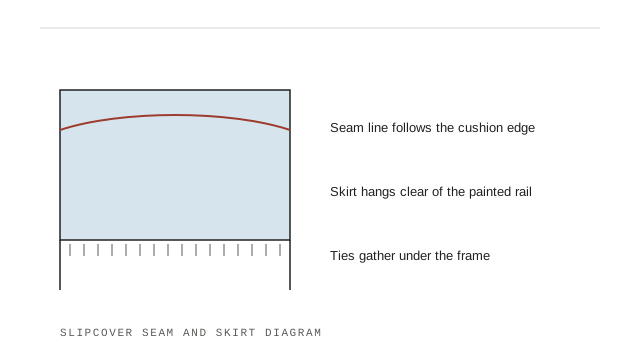
Loose covers sit against a painted frame differently from fixed upholstery, and the seam line shows it.
Painted frames and loose covers grew up together. A hard, flat, coloured frame wants a soft edge against it, and a cover that can be taken off is the practical answer in a house that is opened and closed with the seasons. The diagram above marks the three places where a slipcover is decided: the seam line, the skirt and the ties.
The seam line
A loose cover reads well when its main seam follows the cushion edge rather than cutting across the visible face of the seat. A seam that lands mid-panel breaks the block of textile in the same way a badly placed rail breaks a painted panel, and it will always draw the eye.
The skirt
The skirt decides how much of the painted frame stays visible. A short skirt leaves the painted rail and legs on show and keeps the colour in the room; a long skirt covers them and turns the piece into a block of cloth. Neither is more correct, but the choice should be made knowing that a long skirt effectively removes a painted surface from the room.
Ties and gathers
Ties gathered under the frame rather than at the outside corners keep the silhouette clean. Corner ties are quicker to make and quicker to fit, but they add four visual events to a piece that is otherwise quiet.
Cloth against flat colour
Flat painted colour is an unusually demanding neighbour for a textile. It has no variation of its own, so it exaggerates any variation in the cloth beside it: a slub, an open weave, a check that is slightly off square. Plain heavy cottons and linens sit most easily against it. Where a pattern is wanted, a pattern at a small scale generally survives the comparison better than a large one, because the large one competes with the painted field for the same role in the room.