How painted surfaces wear
FINISH
PLATE 03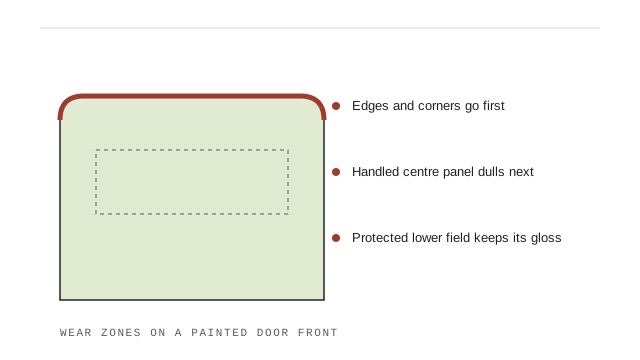
Edges, handles and seat fronts lose their film long before the flat panels beside them do.
Paint does not wear evenly, and the pattern of wear on a painted piece is legible. The drawing above marks the three zones on a door front: the edges and corners, the handled centre panel, and the protected lower field.
Edges first
Every arris is a place where the film is thinnest, because paint pulls away from a sharp corner as it dries and because every knock lands there. On a chest that has been in use for decades the edges go back to primer or to timber while the panels beside them are still sound. This is why deliberately distressed reproductions concentrate on edges: it is the one wear pattern that is unmistakably honest.
Handled zones
The area around a knob or a pull dulls before it chips. Repeated contact with skin polishes a matt film to a low sheen, and the shape of that polished patch follows the way the piece is actually opened. Chair seat fronts and stretcher rails show the same effect, and on a painted dining chair the front rail is usually the first surface to lose its matt reading entirely.
The protected field
Low panels, the backs of case pieces and the undersides of tabletops keep their original film longest. They are the most reliable place to see what colour a piece actually started as, since the exposed surfaces will have faded and yellowed at different rates depending on how much light they received.
What to do about it
- Touch in an edge rather than repainting a whole face; a repainted face rarely matches the aged colour of the panels around it.
- Expect the touched-in patch to be slightly brighter than its surroundings for some time.
- Leave a polished handled zone alone unless the film has actually broken. The sheen is wear, not damage.
- If a whole piece is going to be redone, take the opportunity to record what the protected field looks like first.