Paint and finish layers
FINISH
PLATE 02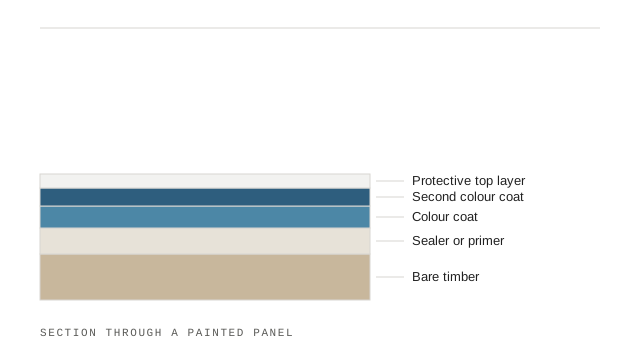
A section through a painted panel, from bare timber to the protective layer that takes the wear.
A painted surface is a stack, and most of the questions people ask about painted furniture are really questions about one layer in that stack. The section drawing above shows the order: timber, sealer or primer, two colour coats, and a protective layer over the top.
The timber
What is underneath still matters after it is hidden. Open-grained timbers telegraph their grain through thin paint films, which can be a virtue or a nuisance depending on what is wanted. Close grained stock takes a flat colour flat. Old surfaces that have already been painted several times carry a thickness of film that softens every arris and moulding a little more with each cycle.
Sealer or primer
The layer that does the least visible work does the most structural work. It gives the colour coat something consistent to sit on, and it stops the timber drinking the colour unevenly, which is the usual cause of a painted panel that looks patchy in raking light. On a piece that has been stripped back, the primer coat is also where the surface is finally made true: any filling and sanding that shows through the primer will show through everything above it.
Colour coats
Two thin colour coats behave better than one heavy one. A heavy coat sags on vertical surfaces, takes far longer to cure through, and stays soft enough to mark for weeks. Two thin coats also give a more even colour, because the second coat corrects the light and heavy patches of the first.
The protective layer
Whether the stack is closed with a clear layer depends on the piece. Surfaces that are touched, wiped or stacked on benefit from one. Surfaces that are only looked at rarely need it, and the flat matt reading of an unprotected colour coat is part of why painted cottage pieces look the way they do. A clear layer will slightly deepen the colour underneath it, so it is worth deciding before the colour is chosen rather than after.
Reading a stack on an old piece
On a piece that has been repainted, a chipped edge is a cross-section. Counting the colour bands at a chip tells you how many times the piece has been done, and the order of those bands is a rough record of the colours that were fashionable in the rooms it passed through.