How painted cottage furniture got its colour
COLOUR
Colour on furniture followed the paint trade, not the cabinet trade. When mixed colour became something you could buy rather than grind, the summer house was where it landed first.
PLATE 07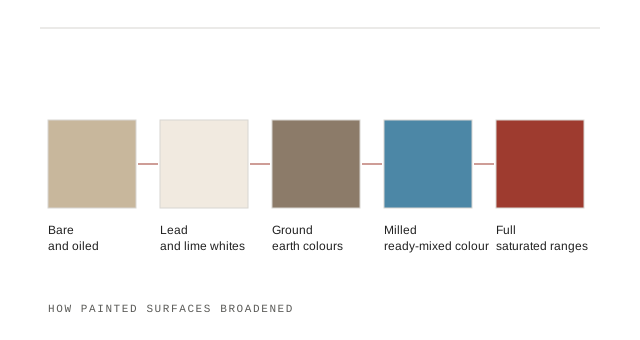
Five swatches showing how furniture surfaces moved from bare oil to broad colour ranges.
The colour on a painted cottage chest is a paint-trade story rather than a cabinet-making one. For most of the history of furniture, colour on a domestic piece meant something ground and mixed on the premises, and its cost and its consistency both followed from that.
Bare and oiled surfaces
The oldest of the surfaces in the plate above is not a colour at all. Timber left bare, or dressed with oil, was the default for country furniture because it required nothing that had to be bought. The surface darkened with handling and with smoke, and the piece acquired its tone rather than receiving one.
Whites and earths
The first widely used painted surfaces in ordinary houses were the whites and the earth colours, because both were available as bulk materials rather than as pigments in the expensive sense. Earth colours are also unusually stable, which is why the surviving painted country pieces that still carry their original colour so often carry a red, an ochre or a brown.
Ready-mixed colour
The change that mattered was the arrival of paint that was mixed before it was sold. Once colour could be bought in a tin, choosing a colour became a domestic decision made in a shop rather than a trade decision made by whoever was doing the work. Furniture was an obvious beneficiary: a chest is a small enough surface that one container will do it, so painting furniture became something a household could take on directly.
Where the summer house came in
Seasonal and coastal houses adopted strong painted colour earlier and more freely than the houses their owners lived in the rest of the year. The reasons are practical as much as anything: furniture in such houses was often second-hand, mismatched and not especially valuable, so painting it carried no loss; salt air and damp made a protective film useful; and the rooms themselves were lighter, so saturated colour that would have been oppressive elsewhere looked right.
Full ranges
The last step in the sequence is simply breadth. When a colour range is wide enough that a whole room can be planned inside it, painted furniture stops being a way of rescuing a tired piece and becomes a way of composing a room. That is the point at which the flat, saturated, deliberately unwoody painted surface becomes a style in its own right rather than a repair.